The Science Behind Fully Double Rainbows
Last updated:
Key Takeaways
- A rainbow forms when sunlight is refracted, reflected, and dispersed as it passes through raindrops.
- A double rainbow appears when some light undergoes two internal reflections inside a raindrop, producing a secondary arc outside the primary rainbow.
- The secondary rainbow is fainter than the primary rainbow and displays its colors in reverse order.
- The position of a rainbow depends on the location of the observer, the sunlight, and the raindrops.
Throughout history, mankind has interpreted the appearance of a rainbow in the sky as a good omen: a sign that the storms have passed and better days are ahead; a bridge between the earthly realm and that of the heavens; or even a marker pointing to the location of a hidden pot of gold!
However you interpret the appearance of a rainbow, we now know that there is a scientific explanation for why it occurs in the first place. But if you’re especially lucky, you may have seen a fully double rainbow, where you get two rainbows for the price of one!
Let’s take a look at the science behind these incredible optical phenomena!
What Causes Any Rainbow?
A rainbow forms when sunlight is refracted, reflected, and dispersed inside water droplets in the air.
Before we explain the science of double rainbows, let’s review the science behind a single rainbow. A single rainbow is an optical illusion created by the reflection, refraction, and dispersion of light through the prism of a water drop.
When sunlight emerges through the clouds following a rainstorm, that light hits the water drops that are still floating or falling through the sky. Some of the sunlight is reflected right away, but some of it enters the water drop and, as it does, it is refracted at the surface. When this light hits the back of the raindrop, it bounces back and once again leaves the raindrop. Only now, the light has been separated into its individual color frequencies.
The result is a rainbow of color that exits the raindrop.

The colors of the rainbow are the same for everyone: red, orange, yellow, green, blue, indigo, and violet (ROYGBIV). In a single rainbow, red is the most prominent color and appears as the ‘top’ band of color. This is due to the properties of light, including frequency and wavelength, of which you can learn more about the spectrum of visible light here.
Last but not least, a rainbow does not have a physical presence. It is an optical illusion, and its ‘existence’ depends on the position of the observer’s head. So, while the good news is that science, light, and color are endlessly fascinating, the bad news is that you’ll never be able to follow a rainbow to its end to find a pot of gold!
What is a Double Rainbow?
A double rainbow forms when sunlight follows two different paths through raindrops, creating a bright primary rainbow and a fainter secondary rainbow outside it.
During a fully double rainbow, you will notice that one rainbow is noticeably brighter than the other. This brighter rainbow is called the primary rainbow. The primary rainbow, as we described above, is the result of light reflecting off of water drops once, then reflecting back out of the drop.
The second rainbow is called, you guessed it, the secondary rainbow. Secondary rainbows appear due to a phenomenon that is similar to the primary rainbow, with one big difference: light responsible for the secondary rainbow undergoes two internal reflections inside the raindrop before exiting.
What Is the Difference Between Primary and Secondary Rainbows?
The primary rainbow is brighter and has red on its outer edge, while the secondary rainbow is fainter, appears outside the primary arc, and displays its colors in reverse order.

| Feature | Primary Rainbow | Secondary Rainbow |
|---|---|---|
| Brightness | Brighter and easier to see | Fainter and harder to see |
| Color Order | Red on the outside and violet on the inside | Violet on the outside and red on the inside |
| Light Path | Created after one internal reflection inside a raindrop | Created after two internal reflections inside a raindrop |
| Position | Forms the inner arc | Appears outside the primary rainbow |
Because some light is lost during the additional reflection, the secondary rainbow is less intense than the primary rainbow. A secondary rainbow is an exceptionally rare sight, so if you do happen to spot a double rainbow stretching all the way across the sky, consider yourself lucky!
Double Your Fun!
The only thing more fun than studying the science of rainbows… is studying the science of fully double rainbows! At Rainbow Symphony, we want to give you the tools you need to advance your education and make it fun to study rainbows, refraction, reflection, and diffraction. That’s why we have a wide variety of plastic diffraction glasses and rainbow glasses, available in multiple colors and styles.
It’s an affordable way to continue learning for yourself or help your class understand the science behind this mysterious phenomenon.
We offer worldwide shipping, 30-day returns for an exchange or a refund, and 10% off your first order when you sign up for our newsletter! We also offer bulk order pricing and custom printing on our paper glasses. If you have any questions about our products or want to inquire about customizing your glasses, don’t hesitate to give us a call at 818-708-8400, or by emailing us at support@rainbowsymphony.com.

Featured Products
-
Diffraction Grating Glasses
Rated 4.8 out of 5Regular price From $ 7.50 USDRegular priceUnit price per ($0.75 each) -
Neon Diffraction Glasses
Rated 5.0 out of 5Regular price From $ 10.00 USDRegular priceUnit price per ($1.00 each) -
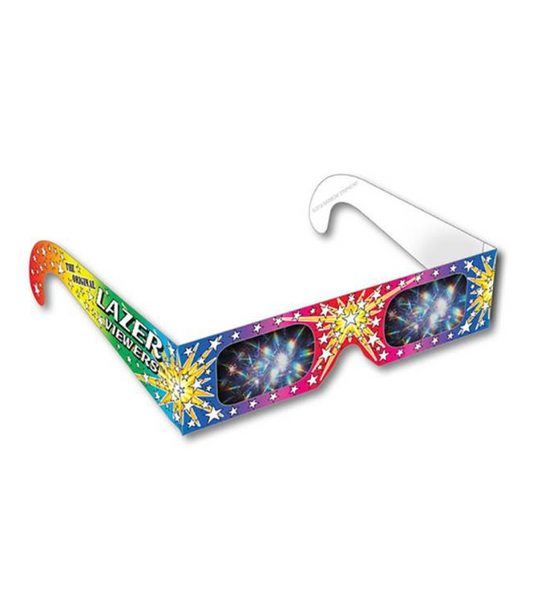
3D Fireworks Glasses - Original Laser Viewers
Rated 4.8 out of 5Regular price From $ 10.00 USDRegular priceUnit price per ($1.00 each)